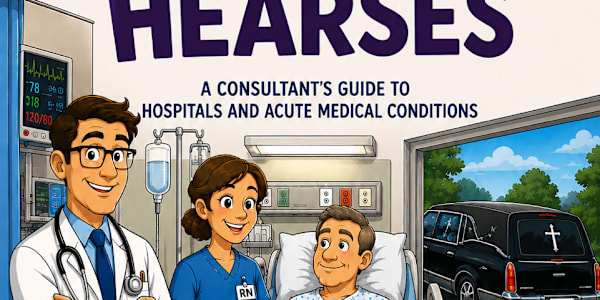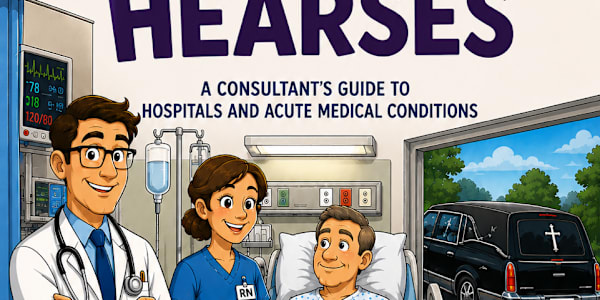


Books

VOCATION

Training to fight on the NHS frontline

Tony plans to save the world one patient at a time, but first, he has to survive the training.

Tony McCluskey is brimming with youthful vigour and enthusiasm at the start of a six-year training programme to fight death and disease on the NHS frontline. Even though his first patient is already dead, there's a lot Tony can learn from somebody with...

Read more

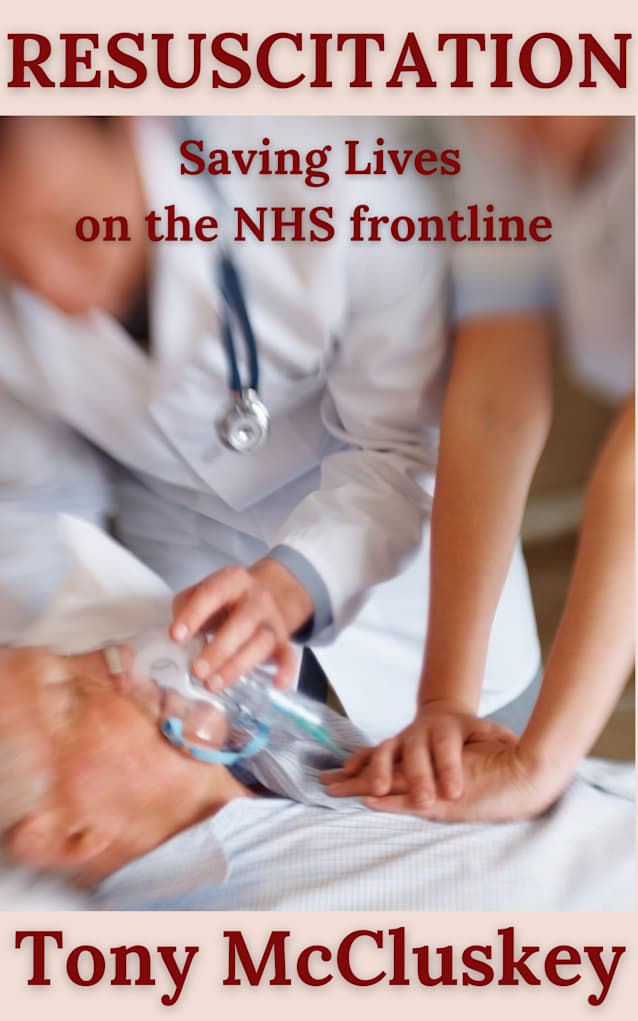
RESUSCITATION

Saving Lives on the NHS frontline

Getting your patients under is an art. Bringing them back safely again is a bloody miracle.

Tony sets out on his career as an anaesthetist and soon discovers that getting his patients off to sleep and keeping them asleep until their operations are over is easier said than done. Waking them up safely afterwards with no ill effects is even harder....

Read more

RESIGNATION

Burnout on the NHS frontline

“The buck stops here” isn’t just a metaphor for an NHS consultant – it’s a cardiac monitor flatlining and you're the person who will have to tell his wife.

After years serving in the trenches on the NHS frontline, Tony has been transferred to staff headquarters as a consultant anaesthetist with a special interest in the care of critically ill...

Read more

Blog

Cardiopulmonary Resuscitation (CPR)

In the last post, we defined what we mean by cardiac arrest and learnt that there are only three cardiac arrest rhythms: shockable, PEA and asystole. We also briefly covered how each of these three arrest rhythms needs to be managed. A shockable rhythm (VF or pulseless VT) must be defibrillated without delay. The reversible causes associated with PEA (the 4Hs and the 4Ts) need to be diagnosed and treated as soon as possible. Asystole usually means it’s game...

Heart attacks and cardiac arrests (Part 2)

Cardiac Arrest

In the last post, we defined cardiac arrest as the sudden, unexpected collapse of the heart’s mechanical pumping action that is potentially reversible. In this post, we’ll look at some of the causes of cardiac arrest, what types of cardiac arrest benefit from the use of a defibrillator, and the principles of resuscitation. In the next post, I’ll take you through the mechanics of how to perform cardiopulmonary resuscitation CPR if you are...

Heart attacks and cardiac arrests (Part 1)

In the next two or three posts, I want to talk about some acute cardiac conditions that people have usually heard of but are often a bit unclear about, or even completely misunderstand. The list includes heart attacks, heart failure, shock, cardiomyopathy and cardiac arrest.

Heart attacks

There are more than 100,000 heart attacks in the UK each year. The good news is that more than 7 out of 10 victims live to tell the tale. Actually, it’s really great...

View All